
On Tuesday, July 7th, twenty-three first-year students in the Bachelor’s Degree in Mechanical Engineerin, offered at the Defense University Center at the Spanish Naval Academy (CUD-ENM), visited UROVESA’s facilities in the town of Valga, in the province of Pontevedra.
The visit is part of the center’s interest in exposing its students to the industrial reality of the sector, in this case through a company that manufactures specialized vehicles for various users, including the Navy itself. The students were accompanied by professors Antón Cacabelos and José Luis Salgueiro.
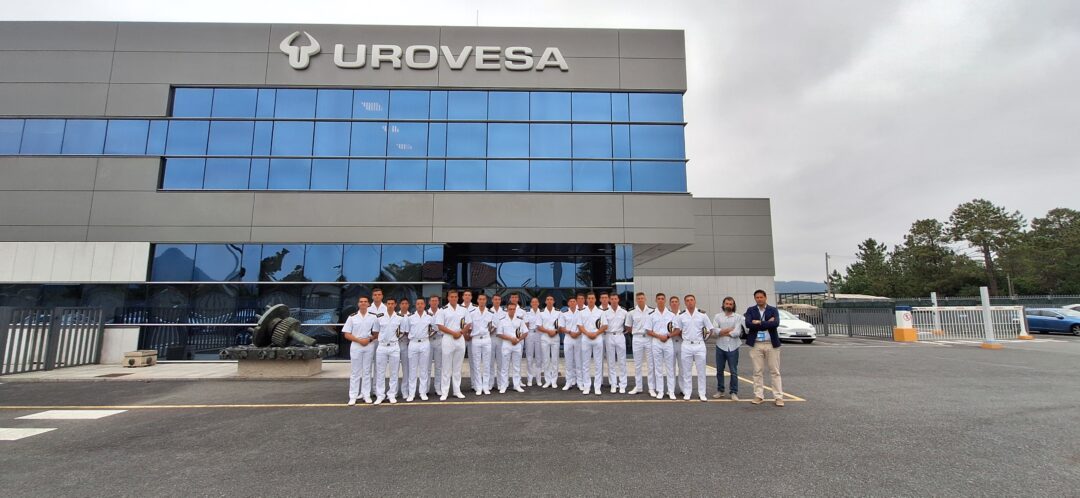
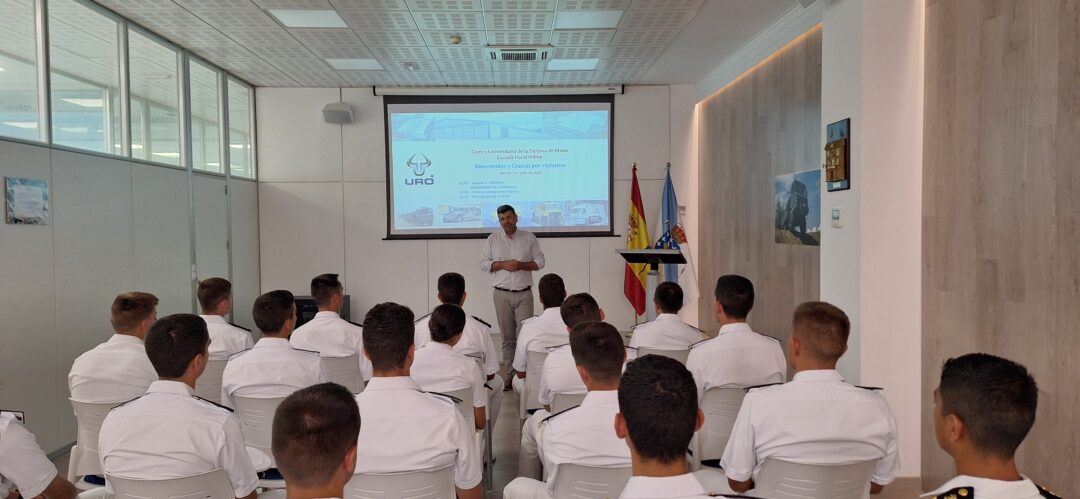
The event began with an institutional presentation by Mr. Raúl Lodos, After-Sales Director at UROVESA, who reviewed the company’s history, its technological development, and its expansion into new markets, both domestic and international. The presentation was also attended by Ms. María Lois Moure, from the company’s Executive Office, who accompanied the group throughout the visit. The presentation was accompanied by audiovisual material focusing on two of the company’s most iconic models, the URO-T and the VAMTAC, showcasing their use in contexts as diverse as air transport by helicopter, emergency response, and public order operations in urban environments.
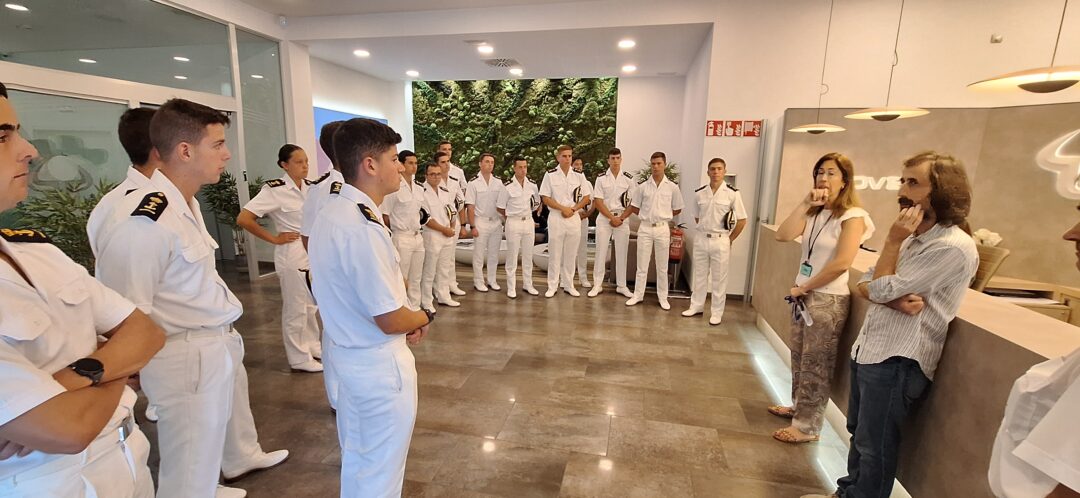
The group then took a tour of the production plant, where they were able to follow the various stages of the manufacturing process: the assembly of the vehicle’s structure, the gradual integration of mechanical, electrical, and electronic systems, and, finally, the verification and quality control procedures, including the detection and correction of any potential issues before final assembly.
Throughout the tour, UROVESA staff answered the students’ questions, thereby helping them better understand the technical and logistical requirements involved in manufacturing vehicles designed to operate under particularly demanding conditions.
The activity allowed students to connect the theoretical content of their education with its application in a real-world work environment, providing a practical perspective that complements the educational objectives of the CUD-ENM.