
CUD-ENM, together with the University of A Coruña (UDC)—through the Center for Research in Naval and Industrial Technologies (CITENI)—and the University of Vigo (UVigo), has been granted a patent for a pioneering system and method for locating indoor radon sources. This technological development is one of the key outcomes of the RnMod research project (PICUD 2022-03), an initiative funded by the CUD-ENM through its own Research Incentive Program, with Dr. Arturo González Gil leading the project as principal investigator.
The system developed offers an advanced technical solution for quickly and accurately identifying the entry points of this naturally occurring radioactive gas into buildings—a key consideration for public health in regions with geology likely to cause its accumulation, such as Galicia. The device combines the use of static sensors with a mobile sensor integrated into an autonomous vehicle that travels through the facilities measuring the gas concentration. The data obtained is processed using a spatial interpolation algorithm (kriging) that automatically guides the vehicle toward the source of the emisión.
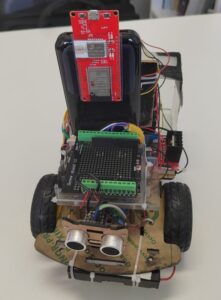
The main advantage of this method is that, by autonomously and accurately identifying the critical points of radon gas entry into a building, it allows for the implementation of direct and efficient mitigation measures, thereby optimizing the time and resources required. The research team responsible for the patent consists of José Antonio Orosa, María Isabel Lamas, and Juan José Cartelle from the UDC; Miguel Ángel Gómez from UVigo; and Arturo González Gil from the CUD-ENM. With this achievement, the CUD-ENM reinforces its commitment to R+D+i aimed at sustainability and safe living conditions in both civilian and military environments.